
Our breeding work is grounded in published research on Varroa Sensitive Hygiene (VSH) and related mite-resistance traits in honey bees. The literature supports the following general conclusions:
1. Daughter queens from VSH-selected stock can retain meaningful mite resistance even after open mating with unselected drones.
A foundational USDA study reported that “a significant level of mite-resistance was retained when these queens were free-mated with unselected drones.”
Harbo, J.R., and Harris, J.W. 2001. Resistance to Varroa destructor (Mesostigmata: Varroidae) When Mite-Resistant Queen Honey Bees (Hymenoptera: Apidae) Were Free-Mated with Unselected Drones. Journal of Economic Entomology 94(6): 1319-1323.
2. Commercially produced daughters from VSH-based breeding programs can reduce mite infestation, though results vary by source and environment.
In one field evaluation, colonies headed by VSH production queens reduced brood infestation by an average of 44%, but expression varied substantially among sources, ranging from 22% to 74%.
Robert G. Danka, Jeffrey W. Harris, José D. Villa, Expression of Varroa Sensitive Hygiene (VSH) in Commercial VSH Honey Bees (Hymenoptera: Apidae), Journal of Economic Entomology, Volume 104, Issue 3, 1 June 2011, Pages 745–749, https://doi.org/10.1603/EC10401
3. Outcrossed VSH-derived stocks can maintain useful resistance in commercially relevant settings.
Research on USDA-derived Pol-line bees, developed by outcrossing VSH queens to commercial U.S. stocks and then selecting for low mite levels, found mite infestations after one season comparable to or lower than those of outcrossed VSH colonies in most comparisons.
Danka, R.G., Harris, J.W. & Dodds, G.E. Selection of VSH-derived “Pol-line” honey bees and evaluation of their Varroa-resistance characteristics. Apidologie 47, 483–490 (2016). https://doi.org/10.1007/s13592-015-0413-7
4. Resistant derived stock can also improve colony-level outcomes beyond mite counts alone.
A large-scale longitudinal study of Pol-line bees found markedly reduced Varroa levels, lower titers of key Varroa-associated viruses, and a two-fold increase in survival relative to standard stock.
O’Shea-Wheller, T.A., Rinkevich, F.D., Danka, R.G. et al. A derived honey bee stock confers resistance to Varroa destructor and associated viral transmission. Sci Rep 12, 4852 (2022). https://doi.org/10.1038/s41598-022-08643-w
5. The broader scientific literature supports the use of VSH-based breeding as a practical route for delivering hybrid mite resistance to production colonies.
A major review of North American breeding programs concluded that breeder queens carrying VSH can be distributed to producers, outcrossed to unselected drones, and still deliver significant Varroa resistance in hybrid colonies.
Rinderer, T.E., Harris, J.W., Hunt, G.J. et al. Breeding for resistance to Varroa destructor in North America. Apidologie 41, 409–424 (2010). https://doi.org/10.1051/apido/2010015
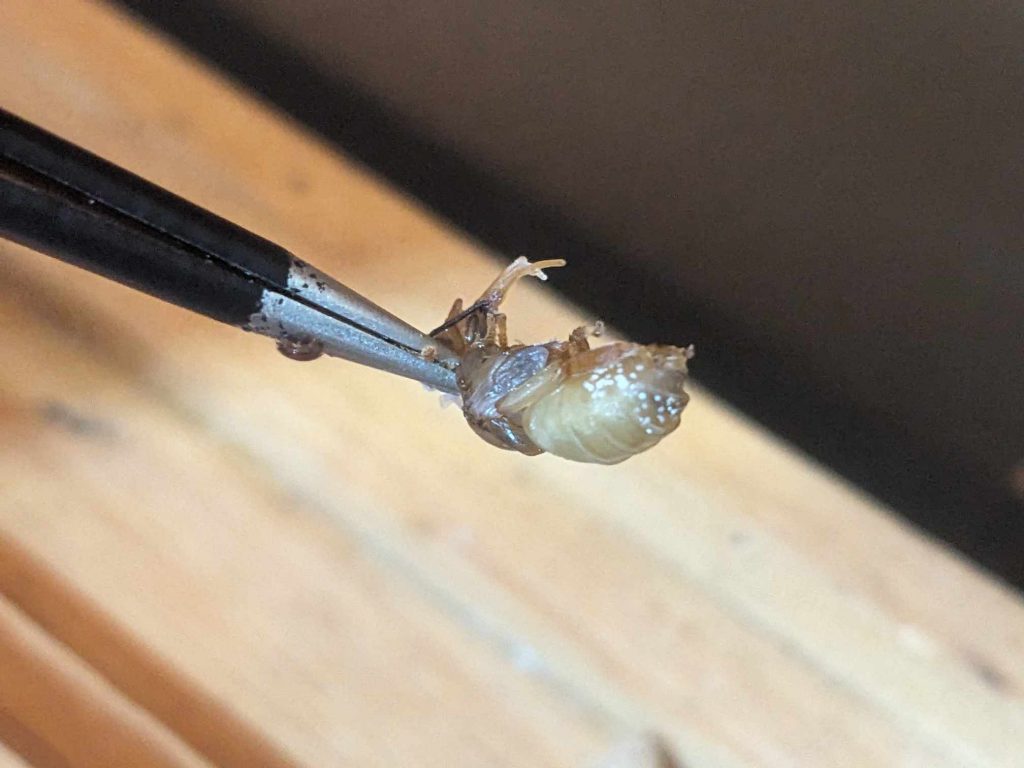
Published research supports the claim that queens from VSH-selected stock can pass on useful mite-resistance traits, even when naturally mated in typical commercial conditions. The strongest evidence does not support guaranteeing that every daughter queen will produce a resistant colony in every apiary. However, selected stock can improve the odds of reduced mite growth and better colony performance, but expression will vary with mating, environment, and management.